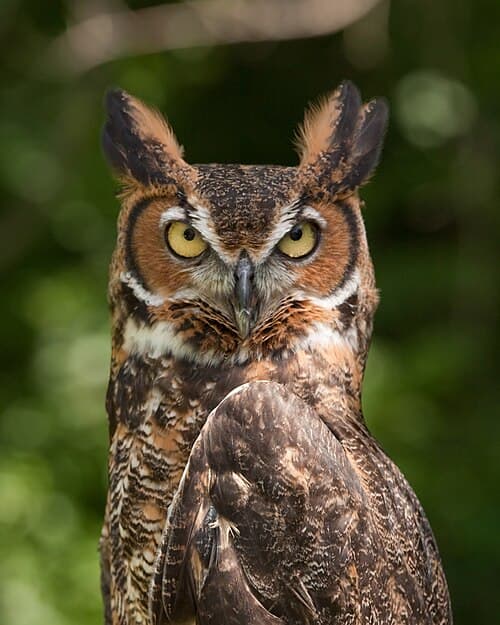
Great Horned Owl
Bubo virginianus
Physical Characteristics
Size
18-25 inches
Wingspan
3.3-4.8 feet
Weight
2.5-3.8 lbs
Plumage
Large, mottled gray-brown, prominent ear tufts, yellow eyes, white throat
Distinctive Features
Large
Natural History & Behavior
🌳 Habitat
Forests, swamps, deserts, urban parks
🍽️ Diet
Mammals, birds, reptiles, amphibians
🦅 Behavior
Powerful predator, hunts at night, uses abandoned nests of other large birds
🗺️ Migration Pattern
Non-migratory resident
🎵 Sounds
Deep hooting 'hoo-hoo-hoo hoo hoo
🛡️ Conservation Status
Least Concern
Fun Facts
Great Horned Owls have adapted well to their environment
Conservation status: Least Concern
Average size: 18-25 inches
Frequently Asked Questions
What does a Great Horned Owl sound like?
Great Horned Owls make Deep hooting 'hoo-hoo-hoo hoo hoo'. These vocalizations are used for communication, territory defense, and attracting mates.
Where do Great Horned Owls live?
Great Horned Owls inhabit forests, swamps, deserts, urban parks. Non-migratory resident
What do Great Horned Owls eat?
The diet of Great Horned Owls consists primarily of mammals, birds, reptiles, amphibians. They forage using various techniques depending on their habitat.
Identify Great Horned Owl Instantly
Download Bird Identifier to recognize Great Horned Owl and thousands of other bird species with just a photo