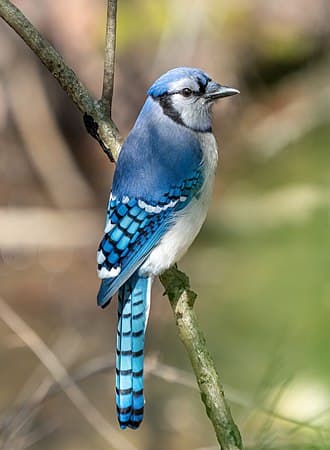
Blue Jay
Cyanocitta cristata
Physical Characteristics
Size
9-12 inches (22-30 cm)
Wingspan
13-17 inches (34-43 cm)
Weight
2.5-3.5 oz (70-100 g)
Plumage
Bright blue upperparts with white underparts, black necklace, blue crest, black and white barred wings and tail with white tips
Distinctive Features
Prominent blue crest, black necklace around throat, intelligent eyes, loud voice
Natural History & Behavior
🌳 Habitat
Deciduous and mixed forests, woodland edges, suburban areas, parks, and backyards throughout eastern and central North America.
🍽️ Diet
Omnivorous - acorns, nuts, seeds, grains, insects, occasionally eggs and nestlings of other birds. Known for caching food for winter.
🦅 Behavior
Intelligent and social, often seen in family groups. Can be aggressive at feeders. Excellent mimics of hawk calls. Cache acorns and seeds for winter storage.
🗺️ Migration Pattern
Partially migratory - some populations migrate south in winter while others remain year-round. Migration patterns are irregular and not fully understood.
🎵 Sounds
Loud "jay jay" call, also produces musical "queedle queedle" and mimics hawk calls perfectly, especially Red-shouldered and Red-tailed Hawks.
🛡️ Conservation Status
Least Concern - stable population
Fun Facts
Blue Jays are corvids, making them relatives of crows and ravens
They can carry up to 5 acorns at once in their throat pouch and mouth
Blue Jay feathers aren't actually blue - they appear blue due to light refraction
They're excellent mimics and can perfectly imitate hawk calls to scare other birds
Blue Jays have strong family bonds and may stay with parents for several months
They helped replant oak forests after the last ice age by caching acorns
Frequently Asked Questions
What does a Blue Jay sound like?
Blue Jays are very vocal with a variety of calls. Their most common call is a loud, harsh "jay jay" sound. They also produce musical "queedle queedle" songs and are excellent mimics of hawk calls, particularly Red-shouldered and Red-tailed Hawks, which they may use to scare other birds from feeders.
Where do Blue Jays live?
Blue Jays are found throughout eastern and central North America, from southern Canada to Texas and Florida. They inhabit deciduous and mixed forests, woodland edges, suburban neighborhoods, parks, and backyards with mature trees.
Are Blue Jays aggressive?
Blue Jays can be aggressive, especially at bird feeders where they may chase away smaller birds. They're also known to occasionally raid other birds' nests for eggs or nestlings. However, they also serve as sentinels, warning other birds of nearby predators with loud alarm calls.
Why are Blue Jays blue?
Interestingly, Blue Jay feathers contain no blue pigment. They appear blue due to light refraction and scattering by the structure of the feathers - the same principle that makes the sky appear blue. If you crush a blue feather, it appears brown.
Do Blue Jays migrate?
Blue Jays are partially migratory - some populations migrate south in winter while others remain year-round residents. Migration patterns are irregular and vary by year, making Blue Jay migration one of the mysteries of ornithology.
Related Birds
Identify Blue Jay Instantly
Download Bird Identifier to recognize Blue Jay and thousands of other bird species with just a photo