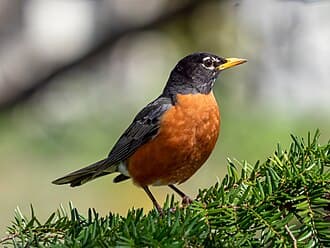
American Robin
Turdus migratorius
Physical Characteristics
Size
9-11 inches (23-28 cm)
Wingspan
12-16 inches (31-41 cm)
Weight
2.7-3 oz (77-85 g)
Plumage
Gray-brown upperparts, brick-red breast and belly, white throat with black streaks, yellow bill
Distinctive Features
Rusty-red breast, white eye ring, runs and stops behavior when foraging
Natural History & Behavior
🌳 Habitat
Widespread across North America in woodlands, suburban lawns, parks, gardens, and fields. Found from sea level to mountain forests.
🍽️ Diet
Omnivorous - earthworms, insects, beetles, caterpillars, and berries. In winter, diet shifts more heavily toward fruits and berries.
🦅 Behavior
Active foragers that run, pause, and tilt head to spot prey. Territorial during breeding season. Often seen in large flocks during migration and winter.
🗺️ Migration Pattern
Partial migrant - northern populations migrate south in winter, while southern birds may be year-round residents. Migration occurs March-April and October-November.
🎵 Sounds
Song is a rich, musical "cheerily cheer-up cheerio", often among the first bird songs heard at dawn. Call notes include "tut tut tut" and sharp "peek".
🛡️ Conservation Status
Least Concern - abundant and widespread
Fun Facts
Despite their name, American Robins are actually thrushes, not true robins
They can spot earthworms from several feet away, likely using sight rather than hearing
Robins may raise 2-3 broods per year, with clutches of 3-5 blue eggs
They're the state bird of Connecticut, Michigan, and Wisconsin
A robin's red breast can vary in intensity based on diet and health
Frequently Asked Questions
What does an American Robin sound like?
American Robins have a melodious, musical song often described as "cheerily cheer-up cheerio". They sing early in the morning and at dusk, making them one of the first birds heard at dawn. Their call notes include sharp "tut tut" sounds and a high "peek" alarm call.
Where do American Robins live?
American Robins are found throughout North America, from Alaska and Canada to Mexico. They inhabit woodlands, suburban lawns, parks, gardens, and farmlands. Northern populations migrate south for winter, while southern birds may stay year-round.
What do American Robins eat?
Robins are omnivorous, eating earthworms, insects, beetles, and caterpillars in spring and summer. In fall and winter, they shift to eating more fruits and berries, including holly, sumac, and juniper berries.
Are American Robins rare?
No, American Robins are one of the most common and widespread birds in North America. They are classified as Least Concern by conservation groups and have adapted well to human-modified landscapes.
Why is the American Robin called a robin if it's not a true robin?
Early European settlers named the American Robin after the European Robin (a completely different species) because both have red/orange breasts. American Robins are actually thrushes in the family Turdidae, while European Robins belong to the Old World flycatcher family.
Identify American Robin Instantly
Download Bird Identifier to recognize American Robin and thousands of other bird species with just a photo