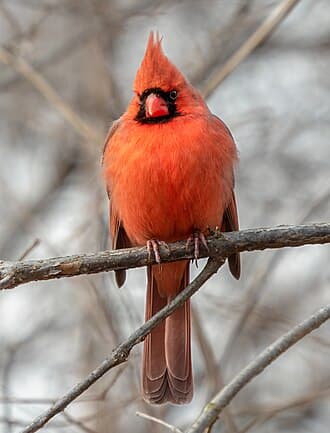
Northern Cardinal
Cardinalis cardinalis
Physical Characteristics
Size
8-9 inches (21-23 cm)
Wingspan
10-12 inches (25-31 cm)
Weight
1.5-1.7 oz (42-48 g)
Plumage
Males: brilliant red with black face mask. Females: buffy tan with reddish wings, tail, and crest. Both have prominent crests and thick orange-red bills
Distinctive Features
Prominent pointed crest, thick conical bill, long tail, sexual dimorphism in plumage
Natural History & Behavior
🌳 Habitat
Woodland edges, thickets, suburban gardens, parks, and wetland edges throughout the eastern and central United States, extending into Mexico and Central America.
🍽️ Diet
Seeds, grains, and fruits make up 90% of diet. Also eat insects, especially during breeding season. Favorite seeds include sunflower, safflower, and millet.
🦅 Behavior
Territorial and aggressive, often seen chasing other birds from feeders. Males may attack their own reflection. Forages on ground and in shrubs. Pairs mate for life.
🗺️ Migration Pattern
Non-migratory resident throughout range. Establishes year-round territories.
🎵 Sounds
Song is a series of clear, loud whistles: "cheer cheer cheer, birdy birdy birdy, what-cheer what-cheer". Both sexes sing. Call is a sharp metallic "chip".
🛡️ Conservation Status
Least Concern - population stable or increasing
Fun Facts
State bird of Illinois, Indiana, Kentucky, North Carolina, Ohio, Virginia, and West Virginia
Both male and female cardinals sing, unlike most songbird species
Males feed females beak-to-beak during courtship
Young cardinals don't develop their bright red color until after their first molt
Cardinals have been expanding their range northward over the past century
They can live up to 15 years in the wild
Frequently Asked Questions
What does a Northern Cardinal sound like?
Cardinals have a loud, clear whistling song consisting of repeated phrases like "cheer cheer cheer" or "birdy birdy birdy". Both males and females sing, and pairs often sing duets. Their call is a sharp, metallic "chip" sound.
Where do Northern Cardinals live?
Cardinals are found throughout the eastern and central United States, from southern Canada to Mexico and Central America. They prefer woodland edges, thickets, suburban gardens, and parks with dense shrub cover.
Why are female cardinals brown instead of red?
Female cardinals have subdued buffy-tan coloring with reddish tinges to help them stay camouflaged while incubating eggs. The bright red male can attract predators away from the nest while the female remains hidden.
Are Northern Cardinals rare?
No, Northern Cardinals are common and widespread. Their population is stable or increasing, and they readily adapt to human-modified landscapes, making them frequent visitors to backyard feeders.
Do Cardinals mate for life?
Yes, Northern Cardinals typically mate for life and stay together year-round. Pairs maintain close bonds and often sing duets to strengthen their pair bond and defend territory.
Related Birds
Identify Northern Cardinal Instantly
Download Bird Identifier to recognize Northern Cardinal and thousands of other bird species with just a photo