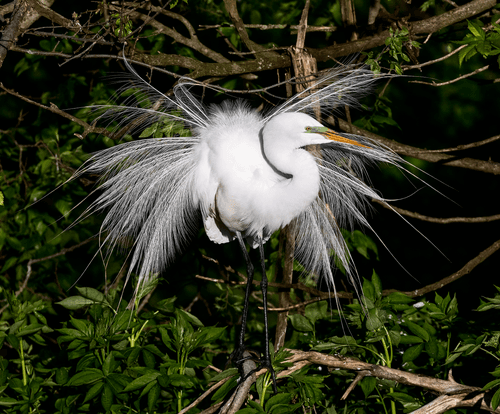
Great Egret
Ardea alba
Physical Characteristics
Size
37-41 inches
Wingspan
4.3-4.6 feet
Weight
1.9-3.3 lbs
Plumage
All white, long neck, black legs and feet, yellow bill
Distinctive Features
All white
Natural History & Behavior
🌳 Habitat
Marshes, ponds, tidal flats, streams
🍽️ Diet
Fish, frogs, insects, small mammals
🦅 Behavior
Stalks prey slowly or stands motionless, flies with neck retracted
🗺️ Migration Pattern
Migratory in north, resident in south
🎵 Sounds
Hoarse croaks
🛡️ Conservation Status
Least Concern
Fun Facts
Great Egrets have adapted well to their environment
Conservation status: Least Concern
Average size: 37-41 inches
Frequently Asked Questions
What does a Great Egret sound like?
Great Egrets make Hoarse croaks. These vocalizations are used for communication, territory defense, and attracting mates.
Where do Great Egrets live?
Great Egrets inhabit marshes, ponds, tidal flats, streams. Migratory in north, resident in south
What do Great Egrets eat?
The diet of Great Egrets consists primarily of fish, frogs, insects, small mammals. They forage using various techniques depending on their habitat.
Identify Great Egret Instantly
Download Bird Identifier to recognize Great Egret and thousands of other bird species with just a photo