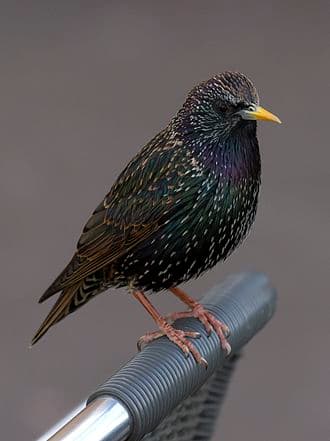
European Starling
Sturnus vulgaris
Physical Characteristics
Size
7.9-9.1 inches
Wingspan
12.2-15.8 inches
Weight
2.1-3.4 oz
Plumage
Iridescent black with white spots in winter, glossy purple-green in summer, yellow bill
Distinctive Features
Iridescent black with white spots in winter
Natural History & Behavior
🌳 Habitat
Cities, suburbs, farms, fields
🍽️ Diet
Omnivorous - insects, fruits, seeds, garbage
🦅 Behavior
Aggressive, invasive species, huge flocks, excellent mimic
🗺️ Migration Pattern
Resident and short-distance migrant
🎵 Sounds
Variety of whistles, clicks, mimics, mechanical sounds
🛡️ Conservation Status
Invasive species in North America
Fun Facts
European Starlings have adapted well to their environment
Conservation status: Invasive species in North America
Average size: 7.9-9.1 inches
Frequently Asked Questions
What does a European Starling sound like?
European Starlings make Variety of whistles, clicks, mimics, mechanical sounds. These vocalizations are used for communication, territory defense, and attracting mates.
Where do European Starlings live?
European Starlings inhabit cities, suburbs, farms, fields. Resident and short-distance migrant
What do European Starlings eat?
The diet of European Starlings consists primarily of omnivorous - insects, fruits, seeds, garbage. They forage using various techniques depending on their habitat.
Identify European Starling Instantly
Download Bird Identifier to recognize European Starling and thousands of other bird species with just a photo