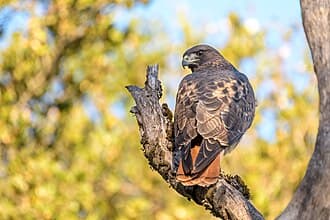
Red-tailed Hawk
Buteo jamaicensis
Physical Characteristics
Size
19-25 inches (48-65 cm)
Wingspan
4-4.8 feet (1.2-1.5 m)
Weight
1.5-3.5 lbs (0.7-1.6 kg), females larger
Plumage
Variable, typically brown above with pale underparts and dark belly band, distinctive rusty-red tail (adults)
Distinctive Features
Red tail (adults), dark patagial marks on underwing, broad rounded wings, stocky build
Natural History & Behavior
🌳 Habitat
Open country, woodlands, prairies, deserts, agricultural fields, roadsides. Highly adaptable, from sea level to mountains.
🍽️ Diet
Small mammals (voles, mice, rats, rabbits), also birds, snakes, lizards, and carrion. Opportunistic hunters.
🦅 Behavior
Soars on thermals with wings in slight dihedral. Hunts from perches or while soaring. Territorial, performing dramatic courtship displays.
🗺️ Migration Pattern
Partial migrant - northern birds move south in winter, southern populations resident year-round.
🎵 Sounds
Iconic hoarse screaming call: "kee-eeee-arrr", descending in pitch. Most recognizable raptor call, often used in media for any large bird.
🛡️ Conservation Status
Least Concern - abundant and widespread
Fun Facts
Their call is the most-used sound effect for birds in Hollywood movies and TV
They can spot a mouse from 100 feet in the air
Red-tailed Hawks mate for life and return to the same nesting territory year after year
Juveniles don't have red tails - they develop them in their second year
They have 14 recognized subspecies across their range
Can live over 20 years in the wild
Frequently Asked Questions
What does a Red-tailed Hawk sound like?
Red-tailed Hawks have a distinctive hoarse, screaming call: "kee-eeee-arrr" that descends in pitch. This is the iconic raptor scream heard in countless movies and TV shows, often used to represent any large bird of prey, including eagles.
Where do Red-tailed Hawks live?
Red-tailed Hawks are found throughout North America from Alaska to Panama. They inhabit open country, woodlands, prairies, deserts, agricultural fields, and roadsides. They're highly adaptable and can be found from sea level to mountain forests.
How can you identify a Red-tailed Hawk?
Adult Red-tailed Hawks have a distinctive rusty-red tail, brown upperparts, pale underparts with a dark belly band, and dark patagial marks on the leading edge of the underwings. They have broad, rounded wings and a stocky build. Juveniles have brown banded tails instead of red.
What do Red-tailed Hawks eat?
Red-tailed Hawks primarily hunt small mammals like voles, mice, rats, and rabbits. They also eat birds, snakes, lizards, and will scavenge carrion. They're opportunistic hunters, taking whatever prey is most abundant in their territory.
Are Red-tailed Hawks rare?
No, Red-tailed Hawks are the most common and widespread hawk species in North America. They're frequently seen perched on poles along highways or soaring over open country. Their population is stable and they're classified as Least Concern.

Identify Red-tailed Hawk Instantly
Download Bird Identifier to recognize Red-tailed Hawk and thousands of other bird species with just a photo