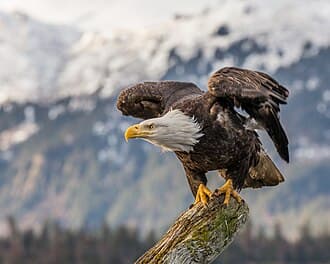
Bald Eagle
Haliaeetus leucocephalus
Physical Characteristics
Size
28-40 inches (71-96 cm)
Wingspan
6-7.5 feet (1.8-2.3 m)
Weight
6.5-14 lbs (3-6.3 kg), females larger than males
Plumage
Adults: white head and tail, dark brown body. Juveniles: mottled brown overall, gaining adult plumage by 5 years
Distinctive Features
Massive hooked yellow bill, powerful talons, white head and tail (adults), huge size
Natural History & Behavior
🌳 Habitat
Near large bodies of water with abundant fish and tall trees for nesting - coasts, rivers, and large lakes across North America.
🍽️ Diet
Primarily fish (salmon, trout, catfish), also waterfowl, small mammals, turtles, and carrion. Known to steal food from other birds (kleptoparasitism).
🦅 Behavior
Soars on thermal currents with flat wings. Builds enormous stick nests used year after year. Mates for life. Aggressive territorial displays during breeding season.
🗺️ Migration Pattern
Partial migrant - northern populations move south in winter to find open water. Southern birds are year-round residents.
🎵 Sounds
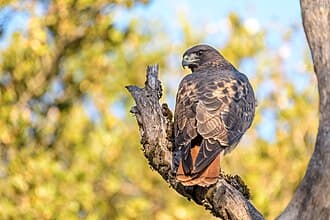
High-pitched whistling or piping calls, surprisingly weak for such a large bird: "klee-kik-ik-ik-ik". Often dubbed over with Red-tailed Hawk screams in movies.
🛡️ Conservation Status
Least Concern - successful conservation recovery from near extinction
Fun Facts
Not actually bald - "bald" meant "white-headed" in old English
Can dive at speeds up to 100 mph (160 km/h) when hunting
Their nests can weigh over 2,000 pounds (1 ton) and are the largest of any bird in North America
Benjamin Franklin opposed the Bald Eagle as national bird, preferring the Wild Turkey
They mate for life and return to the same nest each year, adding to it continuously
Bald Eagles can live 20-30 years in the wild, up to 50 in captivity
They don't get their iconic white head and tail until 4-5 years of age
Frequently Asked Questions
What does a Bald Eagle sound like?
Surprisingly, Bald Eagles have a rather weak, high-pitched whistling call that sounds like "klee-kik-ik-ik-ik". This is quite unimpressive for such a large, majestic bird. In movies and TV, Bald Eagle calls are often dubbed over with the much more dramatic scream of a Red-tailed Hawk.
Where do Bald Eagles live?
Bald Eagles are found near large bodies of water throughout North America, including coastlines, rivers, and large lakes. They need tall trees for nesting and roosting, and abundant fish populations for food. Their range extends from Alaska and northern Canada to northern Mexico.
Are Bald Eagles endangered?
No, Bald Eagles are no longer endangered. They were removed from the Endangered Species List in 2007 after a remarkable recovery. In the 1960s, there were only about 400 nesting pairs left due to DDT poisoning. Today, there are over 300,000 individuals in North America.
How can you tell a juvenile Bald Eagle from an adult?
Adult Bald Eagles (5+ years old) have distinctive white heads and tails with dark brown bodies. Juvenile eagles are mottled brown overall with no white head or tail. They gradually develop more white plumage over 4-5 years before reaching full adult plumage.
What do Bald Eagles eat?
Bald Eagles primarily eat fish, including salmon, trout, and catfish. They also hunt waterfowl, small mammals, turtles, and will scavenge carrion. They're opportunistic feeders and are known to steal food from other birds, a behavior called kleptoparasitism.
Identify Bald Eagle Instantly
Download Bird Identifier to recognize Bald Eagle and thousands of other bird species with just a photo