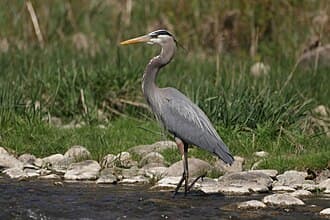
Great Blue Heron
Ardea herodias
Physical Characteristics
Size
38-54 inches (97-137 cm)
Wingspan
5.5-6.6 feet (1.7-2 m)
Weight
4.6-7.3 lbs (2.1-3.3 kg)
Plumage
Blue-gray body, white head with black stripe over eye, long black plumes from head, rusty thighs
Distinctive Features
Very tall, long S-shaped neck, dagger-like yellow bill, long legs, flies with neck tucked
Natural History & Behavior
🌳 Habitat
Freshwater and saltwater edges - lakes, ponds, rivers, marshes, coastal areas, wetlands throughout North America.
🍽️ Diet
Primarily fish, also frogs, salamanders, snakes, small mammals, insects, small birds. Hunts by standing still or wading slowly.
🦅 Behavior
Solitary hunter, stands motionless waiting for prey. Strikes with lightning speed. Flies with neck retracted in S-curve. Nests colonially in rookeries.
🗺️ Migration Pattern
Partially migratory - northern birds move south to find open water in winter, southern populations resident.
🎵 Sounds
Deep, hoarse croaking call: "frahnk frahnk". Often silent. Makes bill-clapping sounds at nest.
🛡️ Conservation Status
Least Concern - widespread and common
Fun Facts
Can stand perfectly still for an hour waiting to ambush prey
Despite their size, they weigh only 5-6 pounds due to hollow bones
They swallow fish whole, headfirst to prevent scales and spines from catching
Great Blue Herons have specialized powder-down feathers that produce a talcum-like substance for grooming
They've been known to hunt at night under bright lights
Can live over 20 years in the wild
Frequently Asked Questions
What does a Great Blue Heron sound like?
Great Blue Herons make a deep, hoarse croaking call that sounds like "frahnk frahnk". They're usually silent while hunting but may call in flight or when disturbed. At their nests, they make bill-clapping sounds and various croaks and grunts.
Where do Great Blue Herons live?
Great Blue Herons live near water throughout North and Central America - along lakes, ponds, rivers, marshes, swamps, and coastlines. They can be found from southern Canada to northern South America, in both freshwater and saltwater environments.
What do Great Blue Herons eat?
Great Blue Herons primarily eat fish, but their diet also includes frogs, salamanders, snakes, small mammals, insects, and small birds. They hunt by standing motionless or wading slowly, then striking prey with their sharp bills in a lightning-fast motion.
How tall is a Great Blue Heron?
Great Blue Herons stand 3.2-4.5 feet tall (38-54 inches). They're the largest heron in North America. Their long legs and neck give them impressive height, perfect for wading in shallow water and spotting prey.
Why do Great Blue Herons stand on one leg?
Great Blue Herons often stand on one leg to conserve body heat. By tucking one leg up against their body and among their feathers, they reduce heat loss. This behavior is common in many wading bird species.
Related Birds
Identify Great Blue Heron Instantly
Download Bird Identifier to recognize Great Blue Heron and thousands of other bird species with just a photo