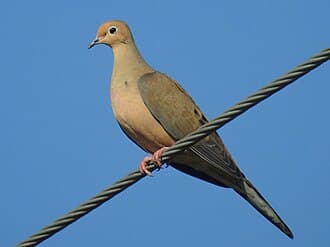
Mourning Dove
Zenaida macroura
Physical Characteristics
Size
9-13 inches (23-34 cm)
Wingspan
17-19 inches (43-48 cm)
Weight
3-6 oz (85-170 g)
Plumage
Soft gray-brown overall, pinkish wash on breast, black spots on wings, long pointed tail with white edges, small head
Distinctive Features
Long pointed tail, small head, black spots on wings, gentle expression, whistling wing sound in flight
Natural History & Behavior
🌳 Habitat
Open and semi-open areas throughout North America - farms, suburbs, woodland edges, roadsides, parks, deserts.
🍽️ Diet
Almost entirely seeds - waste grain, grass seeds, weed seeds, occasionally snails. Feeds on ground. Swallows seeds whole.
🦅 Behavior
Ground feeder, foraging in pairs or small flocks. Fast, direct flight with whistling wings. Frequent visitor to feeders and birdbaths. Gentle and peaceful.
🗺️ Migration Pattern
Partially migratory - northern populations move south in winter, southern birds resident year-round.
🎵 Sounds
Soft, mournful cooing: "cooOOO-woo-woo-woo", giving them their name. Also makes whistling wing sound in flight.
🛡️ Conservation Status
Least Concern - one of the most abundant birds in North America, estimated 350 million individuals
Fun Facts
One of the most abundant birds in North America with over 350 million individuals
Can raise up to 6 broods per year, more than most bird species
Both parents produce "crop milk" to feed nestlings
They drink by sucking water continuously, unlike most birds that scoop and tip their heads back
Can fly at speeds exceeding 55 mph
The whistling sound in flight comes from their wings, not vocalizations
Despite hunting pressure (hunted in 40 states), populations remain stable due to high reproduction
Frequently Asked Questions
What does a Mourning Dove sound like?
Mourning Doves make a soft, mournful cooing sound: "cooOOO-woo-woo-woo". The call is gentle and melancholic, which gives them their name. They also make a distinctive whistling sound with their wings during flight, especially when taking off or landing.
Where do Mourning Doves live?
Mourning Doves are found throughout North America from southern Canada to Central America. They inhabit open and semi-open areas including farms, suburbs, woodland edges, parks, and deserts. They're one of the most widespread and common birds on the continent.
What do Mourning Doves eat?
Mourning Doves eat almost exclusively seeds - waste grain, grass seeds, weed seeds, and sunflower seeds from feeders. They occasionally eat snails for calcium. They forage on the ground and swallow seeds whole, storing them in their crop.
Are Mourning Doves and pigeons the same?
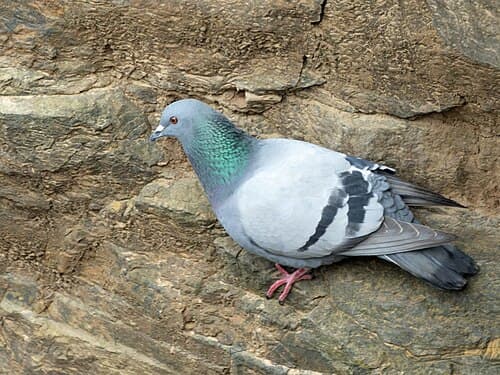
Mourning Doves and pigeons are related - both belong to the family Columbidae - but they're different species. Mourning Doves are slimmer, have long pointed tails, and are native to North America. Rock Pigeons (common city pigeons) are stockier with shorter tails and were introduced from Europe.
Why do Mourning Doves coo?
Mourning Doves coo primarily for courtship and to establish territory. Males coo to attract females and defend their territory. The soft cooing can be heard year-round, though it's most frequent during breeding season (spring through fall).
Related Birds
Identify Mourning Dove Instantly
Download Bird Identifier to recognize Mourning Dove and thousands of other bird species with just a photo